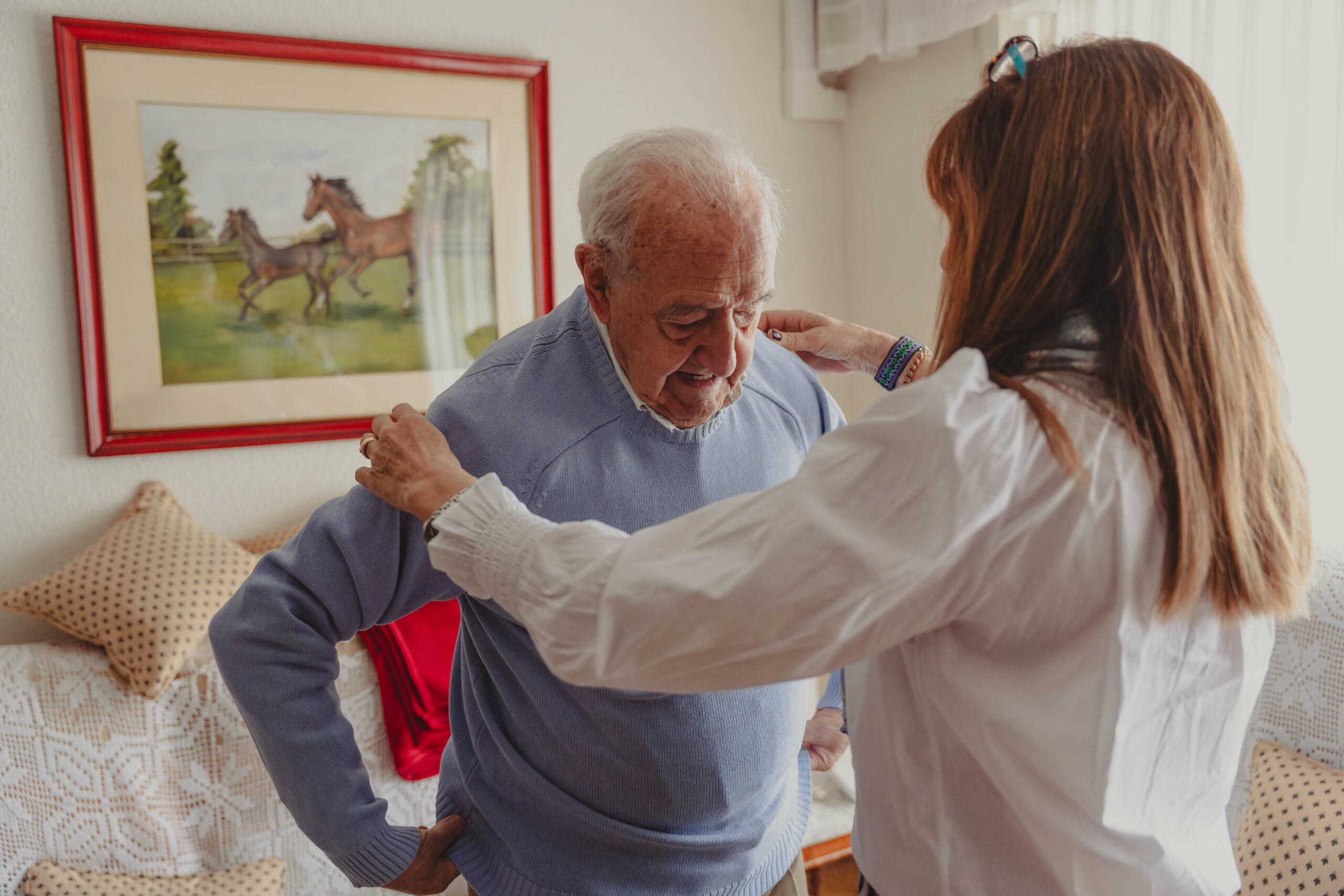
The best clothing options for simplifying dementia care dressing routines include adaptive clothing with easy closures, soft fabrics, and minimal buttons or zippers. These choices reduce frustration and promote independence while maintaining comfort and dignity for your senior loved one living with dementia.
What Types of Closures Work Best for Clothing?
Adaptive clothing with simple closures can transform the daily dressing routine. Consider these options:
- Velcro closures – Replace traditional buttons and zippers with hook-and-loop fasteners that are easier to manage
- Magnetic closures – Offer a seamless appearance while being simple to fasten and unfasten
- Elastic waistbands – Eliminate the need for buttons, snaps, or zippers on pants and skirts
- Pull-over styles – Reduce the number of steps required to get dressed
These modifications can help your loved one maintain independence and reduce the time and stress associated with getting dressed each day.
A professional caregiver can help your loved one with a variety of tasks at home, including grooming and dressing. If your senior loved one has been diagnosed with a serious condition and needs help with tasks like meal prep, transportation, medication reminders, bathing, and grooming, reach out to Senior Stride Home Care, a leading provider of home care service Oshkosh families can trust. We also offer comprehensive care for seniors with dementia, Alzheimer’s, and Parkinson’s.
Which Fabric Choices Provide the Most Comfort?
Fabric selection plays a crucial role in ensuring comfort throughout the day. Prioritize these materials:
- Soft cotton blends – Breathable and gentle against sensitive skin
- Jersey knits – Stretchy fabrics that move with the body and are easy to pull on
- Moisture-wicking materials – Keep skin dry and comfortable, especially for individuals with incontinence concerns
- Tagless designs – Prevent irritation from labels and tags
Avoid fabrics that are stiff, scratchy, or require special care. Machine-washable options simplify laundry duties for caregivers.
How Can Clothing Design Support Independence?
Thoughtful design features empower individuals with dementia to participate in their own care:
- Visual cues – Contrasting colors distinguish front from back
- Open-back designs – Allow you to assist with dressing while your loved one remains seated
- Adjustable sizing – Accommodate weight fluctuations and medical devices
- Simplified patterns – Avoid busy prints that may cause confusion or visual overstimulation
Look for clothing specifically designed for seated dressing, as many individuals with dementia spend considerable time sitting.
Aging in place can present a few challenges for seniors living with dementia. However, with top-rate professional dementia home care that offers Oshkosh families peace of mind, they can still live independently at home. Families can rely on Senior Stride Home Care to provide their elderly loved ones with mental and social stimulation, timely medication reminders, assistance with meal prep, and much more. Our caregivers are available around the clock to help your loved one live a happier and healthier life.
What Footwear Options Are Safest and Easiest?
Footwear should prioritize safety and ease of use:
- Slip-on shoes with nonslip soles – Reduce fall risk while eliminating the need to tie laces
- Shoes with wide openings – Make it easier to get feet in and out
- Adjustable closures – Allow for swelling throughout the day
- Supportive slippers – Provide comfort for indoor wear with adequate grip
Avoid shoes with laces, high heels, or slippery soles that increase the risk of falls.
Where Can You Find Adaptive Clothing for Dementia Care?
Several retailers specialize in adaptive clothing designed for individuals with dementia and other cognitive challenges:
- Specialized online retailers – Offer extensive selections of adaptive clothing with detailed product descriptions
- Major retail chains – Increasingly carry adaptive clothing lines in their stores and online
- Medical supply stores – Stock functional clothing designed for various care needs
- Custom seamstresses – Can modify existing clothing to include adaptive features
When shopping, read reviews from other caregivers and look for return policies that allow you to try items risk-free.
Seniors living with serious health conditions often need extensive assistance in and outside the home. Senior Stride Home Care is a trusted provider of Oshkosh 24-hour home care. Our caregivers are expertly trained to assist seniors with bathing, grooming, light housekeeping, and various other daily tasks, and we also offer specialized Alzheimer’s, dementia, stroke, and Parkinson’s care. If you need professional care for your loved one, reach out to one of our Care Managers today.
Frequently Asked Questions
Should I involve my loved one with dementia in clothing choices?
+
Yes, whenever possible. Offering limited choices (two options) allows your loved one to maintain autonomy while preventing overwhelming decision-making.
How many outfits should I keep readily available?
+
Maintain 5–7 complete outfits that are easy to mix and match, reducing decision fatigue while ensuring adequate variety for laundering.
What if my loved one refuses to change clothes?
+
Keep duplicates of favorite items and choose battles wisely. Focus on hygiene essentials and allow some flexibility with personal preferences.
Are there clothing options that accommodate medical devices?
+
Yes, many adaptive clothing lines feature discreet openings for feeding tubes, catheters, and other medical equipment while maintaining dignity and style.
How can I make dressing less stressful for both of us?
+
Establish a consistent routine, allow plenty of time, lay out clothes in the order they’ll be put on, and maintain a calm, patient demeanor throughout the process.